Religious Ethics and Economic Decision-Making: Rethinking the Foundations of Responsible Citizenship
Keywords:
religious ethics, economic decision-making, responsible citizenship, economic morality, interfaith dialogue, stewardship, sustainable developmentAbstract
ABSTRACT
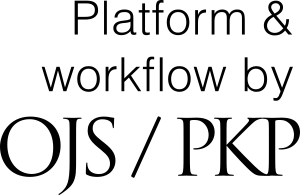
Contemporary economic life is widely experienced as a moral problem rather than a merely technical one. Corruption, exploitative labour practices, widening inequality, environmentally destructive consumption, and financial behaviour organised around short-term advantage have exposed the limits of an account of economic agency built on rational utility maximisation alone. This paper asks what ethical foundations should guide economic decision-making in plural societies. It argues that responsible economic citizenship requires more than economic knowledge or rational calculation: it also requires moral dispositions, and religious ethical traditions can supply valuable resources for cultivating them when they are interpreted inclusively, critically, and within a pluralistic public order. The argument proceeds through conceptual analysis and comparative interpretation rather than empirical investigation. It reconstructs economic decision-making as morally consequential action; compares Christian and Islamic economic ethics in depth against a wider horizon of Jewish, Buddhist, Hindu, and African resources, showing that the traditions diverge in their mode of moral regulation as much as in content; and applies this analysis to consumerism, corruption, inequality, exploitation, and ecological degradation, with particular attention to African contexts. The paper then proposes the Interfaith Ethical Economic Citizenship Framework (IEECF), a non-linear model of six interacting components (plural moral sources, moral awareness, deliberative ethical reasoning, situated economic decision, institutional mediation, and civic outcomes) governed by four operating conditions. It concludes that religious ethics can deepen the moral competence of economic citizens but cannot substitute for law, regulation, and just institutions, and that its most defensible public role is complementary, translational, and self-critical.
References
Ambedkar, B. R. Annihilation of Caste. Edited by S. Anand. London: Verso, 2014. First published 1936.
Aquinas, Thomas. Summa Theologiae. Translated by the Fathers of the English Dominican Province. New York: Benziger Bros., 1947.
Aristotle. Nicomachean Ethics. Translated by Terence Irwin. 2nd ed. Indianapolis: Hackett, 1999.
Basil of Caesarea. On Social Justice. Translated by C. Paul Schroeder. Crestwood, NY: St Vladimir’s Seminary Press, 2009.
Bowles, Samuel. The Moral Economy: Why Good Incentives Are No Substitute for Good Citizens. New Haven, CT: Yale University Press, 2016.
Brown, Clair. Buddhist Economics: An Enlightened Approach to the Dismal Science. New York: Bloomsbury, 2017.
Chapple, Christopher Key, and Mary Evelyn Tucker, eds. Hinduism and Ecology: The Intersection of Earth, Sky, and Water. Cambridge, MA: Harvard University Press, 2000.
Chrysostom, John. On Wealth and Poverty. Translated by Catharine P. Roth. Crestwood, NY: St Vladimir’s Seminary Press, 1984.
Egbetola, O. T., and Oluwaseun Oyewole. “Promoting Sustainable Economic Development through Entrepreneurship Education.” Journal of Science, Vocational and Technical Education 11, no. 1 (2024): 74–82.
Ekeh, Peter P. “Colonialism and the Two Publics in Africa: A Theoretical Statement.” Comparative Studies in Society and History 17, no. 1 (1975): 91–112.
El-Gamal, Mahmoud A. Islamic Finance: Law, Economics, and Practice. Cambridge: Cambridge University Press, 2006.
Fahad, Sundus. “Faith, Migration, and Global Responsibility: Case of Sudanese Refugees.” Journal of World Religions and Interfaith Harmony 5, no. 1 (2026): 52–64. https://journals.iub.edu.pk/index.php/jwrih/article/view/4392.
Flood, Gavin. An Introduction to Hinduism. Cambridge: Cambridge University Press, 1996.
Francis. Fratelli Tutti: On Fraternity and Social Friendship. Vatican City: Libreria Editrice Vaticana, 2020.
Francis. Laudato Si’: On Care for Our Common Home. Vatican City: Libreria Editrice Vaticana, 2015.
Gifford, Paul. Christianity, Development and Modernity in Africa. London: Hurst, 2015.
Gyekye, Kwame. Tradition and Modernity: Philosophical Reflections on the African Experience. New York: Oxford University Press, 1997.
Habermas, Jürgen. “Religion in the Public Sphere.” European Journal of Philosophy 14, no. 1 (2006): 1–25.
Hindu Declaration on Climate Change. Melbourne: Parliament of the World’s Religions, 2009.
Islamic Declaration on Global Climate Change. Istanbul: International Islamic Climate Change Symposium, 2015.
Iyanda, Sunday Elijah, and Hezekiah Deji Komolafe. “An Examination of Social Injustice in 2 Samuel 12:1–13 and Its Lessons for Political and Church Leaders in Nigeria.” Journal of World Religions and Interfaith Harmony 5, no. 1 (2026): 20–31. https://journals.iub.edu.pk/index.php/jwrih/article/view/4481.
Iyer, Sriya. “The New Economics of Religion.” Journal of Economic Literature 54, no. 2 (2016): 395–441.
John Paul II. Centesimus Annus. Vatican City: Libreria Editrice Vaticana, 1991.
Kahneman, Daniel. Thinking, Fast and Slow. New York: Farrar, Straus and Giroux, 2011.
Kuran, Timur. Islam and Mammon: The Economic Predicaments of Islamism. Princeton, NJ: Princeton University Press, 2004.
Kuran, Timur. “Islam and Economic Performance: Historical and Contemporary Links.” Journal of Economic Literature 56, no. 4 (2018): 1292–1359.
Kuran, Timur. “The Provision of Public Goods under Islamic Law: Origins, Impact, and Limitations of the Waqf System.” Law & Society Review 35, no. 4 (2001): 841–98.
Leo XIII. Rerum Novarum. Vatican City: Libreria Editrice Vaticana, 1891.
Levine, Aaron, ed. The Oxford Handbook of Judaism and Economics. New York: Oxford University Press, 2010.
Maimonides, Moses. Mishneh Torah. Hilkhot Mattenot ʿAniyyim [Laws of Gifts to the Poor]. Cited by chapter and law.
Malik, Zohra, and Amir Hayat. “The Place of Women in Hindu Scriptures: A Historical Textural Analysis.” Journal of World Religions and Interfaith Harmony 5, no. 1 (2026): 65–77. https://journals.iub.edu.pk/index.php/jwrih/article/view/4447.
Marshall, T. H. Citizenship and Social Class and Other Essays. Cambridge: Cambridge University Press, 1950.
Mbiti, John S. African Religions and Philosophy. 2nd ed. Oxford: Heinemann, 1990.
McCleary, Rachel M., and Robert J. Barro. The Wealth of Religions: The Political Economy of Believing and Belonging. Princeton, NJ: Princeton University Press, 2019.
Micheletti, Michele. Political Virtue and Shopping: Individuals, Consumerism, and Collective Action. New York: Palgrave Macmillan, 2003.
Naheed, Kishwar, Bushra Subhan, and Rizwan Ali Shinwari. “From Colonialism to Neocolonialism: Palestine as a Case Study in the Legacy of Orientalism in Modern Geopolitics.” Journal of World Religions and Interfaith Harmony 5, no. 1 (2026): 14–19. https://journals.iub.edu.pk/index.php/jwrih/article/view/4310.
Narayanan, Vasudha. “‘One Tree Is Equal to Ten Sons’: Hindu Responses to the Problems of Ecology, Population, and Consumption.” Journal of the American Academy of Religion 65, no. 2 (1997): 291–332.
Niebuhr, Reinhold. Moral Man and Immoral Society: A Study in Ethics and Politics. New York: Charles Scribner’s Sons, 1932.
Obadare, Ebenezer. Pentecostal Republic: Religion and the Struggle for State Power in Nigeria. London: Zed Books, 2018.
Ostrom, Elinor. Governing the Commons: The Evolution of Institutions for Collective Action. Cambridge: Cambridge University Press, 1990.
Oyewole, Oluwaseun. “Ethical AI and Financial Inclusion: Addressing Bias and Inequality in Digital Financial Education for Persons with Disabilities.” In Advancing Disability Inclusion through AI: Education, Accessibility, and Accountability, edited by U. Jacob and M. Maguvhe, 253–78. Hershey, PA: IGI Global Scientific Publishing, 2027. https://doi.org/10.4018/979-8-2600-4800-9.ch009.
Oyewole, Oluwaseun. “Religious Atonement and Economic Ethics: Implications for Financial Literacy Education and Responsible Citizenship in Nigeria.” In Atonement in Religious Traditions, edited by J. S. Adekoya, S. M. Mepaiyeda, O. O. Familusi, and S. O. Okanlawon, 417–34. Ibadan: Department of Religious Studies, University of Ibadan, 2026.
Oyewole, Oluwaseun, and O. G. Ogundipe. “Economic Literacy as a Correlate of Democratic Sustenance among Pre-service Teachers in Ogun State.” National Journal of Social Studies 28, no. 2 (2025): 115–29.
Oyewole, Oluwaseun, and S. A. Olumuyiwa. “Analysis of Critical Thinking and Statistical Literacy as Predictors of Decision-Making Skills among Economics and Mathematics Education Students in Ogun State, Nigeria.” Journal of Agricultural Economics, Extension and Sciences 13, no. 1 (2026): 175–88.
Piketty, Thomas. Capital and Ideology. Translated by Arthur Goldhammer. Cambridge, MA: Harvard University Press, 2020.
Polanyi, Karl. The Great Transformation: The Political and Economic Origins of Our Time. Boston: Beacon Press, 2001. First published 1944.
Rawls, John. Political Liberalism. Expanded ed. New York: Columbia University Press, 2005.
Sachdeva, Sonya, Rumen Iliev, and Douglas L. Medin. “Sinning Saints and Saintly Sinners: The Paradox of Moral Self-Regulation.” Psychological Science 20, no. 4 (2009): 523–28.
Sandel, Michael J. What Money Can’t Buy: The Moral Limits of Markets. New York: Farrar, Straus and Giroux, 2012.
Schumacher, E. F. Small Is Beautiful: A Study of Economics as if People Mattered. London: Blond & Briggs, 1973.
Sen, Amartya. On Ethics and Economics. Oxford: Blackwell, 1987.
Sen, Amartya. “Rational Fools: A Critique of the Behavioral Foundations of Economic Theory.” Philosophy & Public Affairs 6, no. 4 (1977): 317–44.
Smith, Daniel Jordan. A Culture of Corruption: Everyday Deception and Popular Discontent in Nigeria. Princeton, NJ: Princeton University Press, 2007.
Stanley, John, David R. Loy, and Gyurme Dorje, eds. A Buddhist Response to the Climate Emergency. Boston: Wisdom Publications, 2009.
Tamari, Meir. With All Your Possessions: Jewish Ethics and Economic Life. New York: Free Press, 1987.
Tawney, R. H. Religion and the Rise of Capitalism. London: John Murray, 1926.
Transparency International. Corruption Perceptions Index. Berlin: Transparency International, annual. https://www.transparency.org/en/cpi.
Ukah, Asonzeh. A New Paradigm of Pentecostal Power: A Study of the Redeemed Christian Church of God in Nigeria. Trenton, NJ: Africa World Press, 2008.
Wariboko, Nimi. Nigerian Pentecostalism. Rochester, NY: University of Rochester Press, 2014.
Weber, Max. The Protestant Ethic and the Spirit of Capitalism. Translated by Talcott Parsons. London: Routledge, 2001. First published 1904–5.
Downloads
Published
Issue
Section
License
Copyright (c) 2026 Oluwaseun Oyewole

This work is licensed under a Creative Commons Attribution 4.0 International License.